


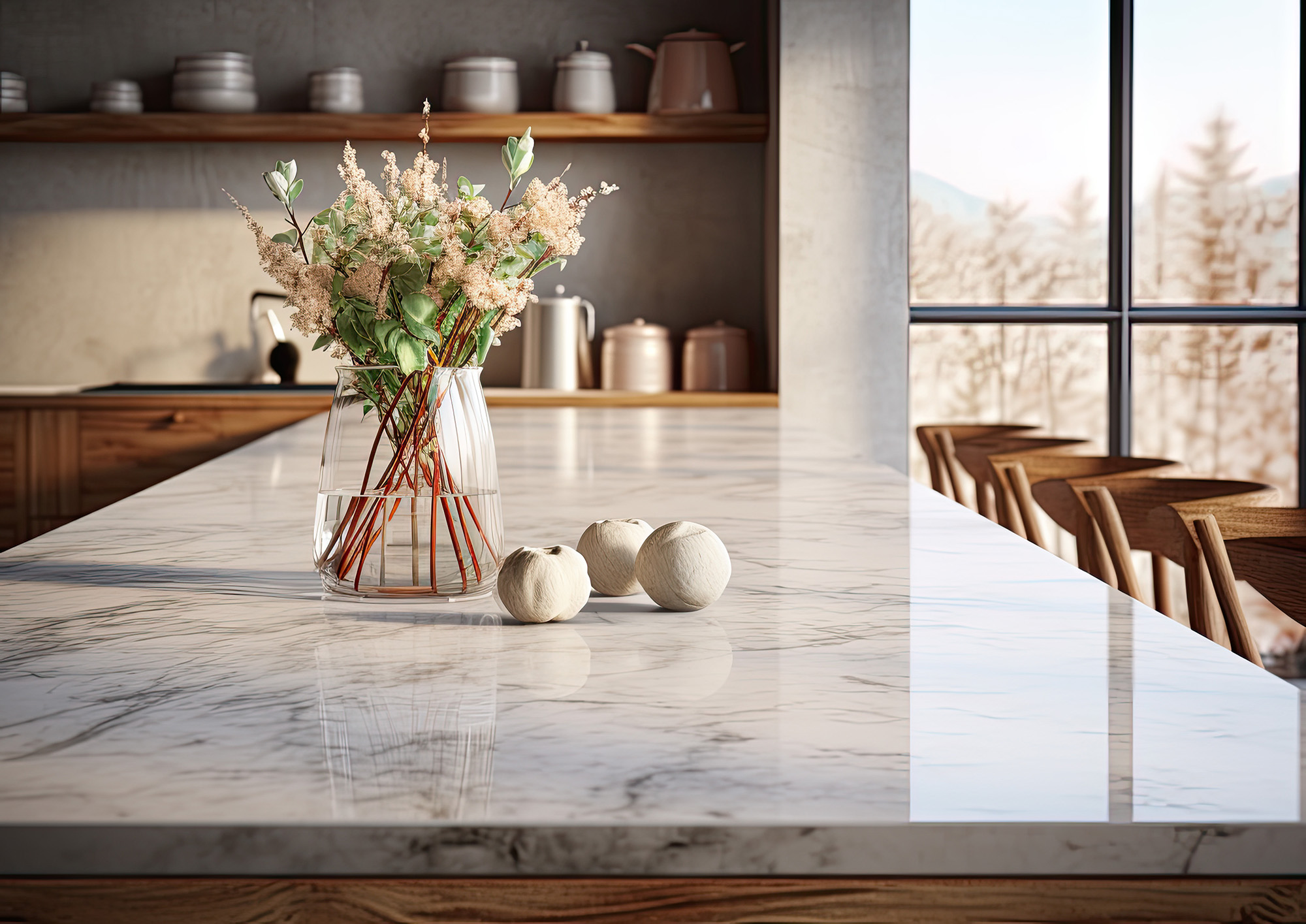
Kitchen renovations in neighborhoods like Hidden Lakes or Marshall Ridge regularly center around expansive, open-concept spaces. In these floor plans, the kitchen functions as the visual hub of the entire first floor, completely visible from the family room and the front entry.
Because local homes favor deep double islands and massive L-shaped configurations, your countertop selection dictates the look and feel of your living area.
Deciding between quartz and granite comes down to how these materials perform under the specific conditions of a North Texas home and your day-to-day lifestyle.
The Seam Challenge Across Large Islands
Quartz solves a major visual hurdle on large kitchen surfaces through predictable manufacturing consistency. Because engineered quartz surfaces feature uniform patterns and controlled designs, our installation teams can match the pieces up perfectly. This allows us to create clean, nearly invisible seams across the longest open-concept layouts.
Achieving that same seamless look with granite is incredibly difficult, even though the natural stone brings the undeniable appeal of completely unique, sweeping movements and earth-toned patterns.
The pure physical scale of a suburban kitchen introduces a distinct layout challenge because a single island can easily stretch ten or twelve feet. Since it is impossible to cover that much space with a single slab of stone, your installation team must join multiple pieces together. Matching the random, flowing veins of natural granite across a massive double island remains a major hurdle, whereas quartz handles the challenge seamlessly.
The Reality of Intense Texas Sunlight
Granite provides long-term color stability that engineered materials cannot match if your kitchen layout places your main workspaces directly beneath large, sun-drenched windows.
As an entirely natural stone formed by the earth, granite handles harsh sunlight without any risk of fading, bleaching, or changing color. Many homes in the area use massive banks of windows or large breakfast nooks to flood the main living space with natural light, making UV exposure a crucial factor to consider based on how your kitchen windows face the sun.
Quartz slabs react differently over time because they are engineered using a blend of crushed stone and polymer resins to bind the material together. Over several years of continuous exposure to direct UV rays, those binding resins can discolor or take on a yellowish tint. While a sunlit kitchen creates a bright, welcoming environment, leading with a natural stone like granite ensures your countertops look exactly the same a decade from now as they do on the day of installation.
Hosting, Pool Parties, and Kitchen Performance
If you love to host neighborhood gatherings, kids' sports parties, or coordinate food staging for busy backyard pool days, your countertops take a direct beating from spilled drinks, heavy platters, and quick prep work.
Quartz removes cleanup worry entirely during a busy event. Its non-porous surface blocks liquids from penetrating the material, letting you focus on your guests and wipe down the counters the next morning without any panic over stains from citrus juices, dark sodas, or red wine.
Granite stands out if you need the freedom to set blistering hot baking sheets or grilling platters straight down from the stove without damaging the surface. Natural stone handles extreme heat effortlessly, but a busy hosting schedule means you must commit to sealing the surface regularly to keep those party spills from soaking into the pores overnight.
Matching the Material to Your Household Routine
Every kitchen gets used differently, and the small habits of your morning routine or cooking style dictate which surface fits your space best. Weighing your specific daily preferences against how these materials perform under pressure clarifies which stone belongs on your cabinets.
Select quartz if you want a high-end look but refuse to add annual stone sealing and specialized cleaning routines to your weekend chore list.
Choose granite if you cook extensively and want the freedom to set blistering hot pots and cast-iron skillets directly onto the counter anywhere in the kitchen.
Opt for quartz if you are pairing your counters with heavily detailed cabinets or complex backsplash tile and need a clean, uniform stone pattern that does not fight for visual attention.
Pick granite if you want a completely unique focal point for your central island, ensuring that no other home in your neighborhood has the exact same stone design.
Select quartz if you rely on harsh household disinfectants or bleach wipes for quick cleanups, as these chemical cleaners can strip away the protective seal on a natural granite surface.
Choose granite if you frequently use heavy countertop appliances like slow cookers or air fryers, which generate sustained, trapped base heat that can stress or discolor engineered resins over time.
Opt for granite if you plan to sell your home in the future and want to leverage the traditional resale value appeal of authentic, one-hundred-percent natural stone slabs.
Finding the Right Countertop Material at Our Keller Showroom
Your kitchen cabinetry, flooring, and natural lighting all affect how a stone slab looks inside your home. Standing next to full-sized displays lets you compare the true textures of these surfaces and see how the patterns change under different light sources. You can look through a wide selection of premium quartz and granite options by visiting the Keller Design Floors showroom at 478 North Main Street in Keller, Texas, or you can contact us directly to discuss your specific design ideas. Our local team can show you how each material handles your household routine so you can make a choice that performs beautifully for years to come.


